Shaker Global
Anti-Corruption & Integrity Foundation
Integrity • Justice • Accountability
Founder Biography
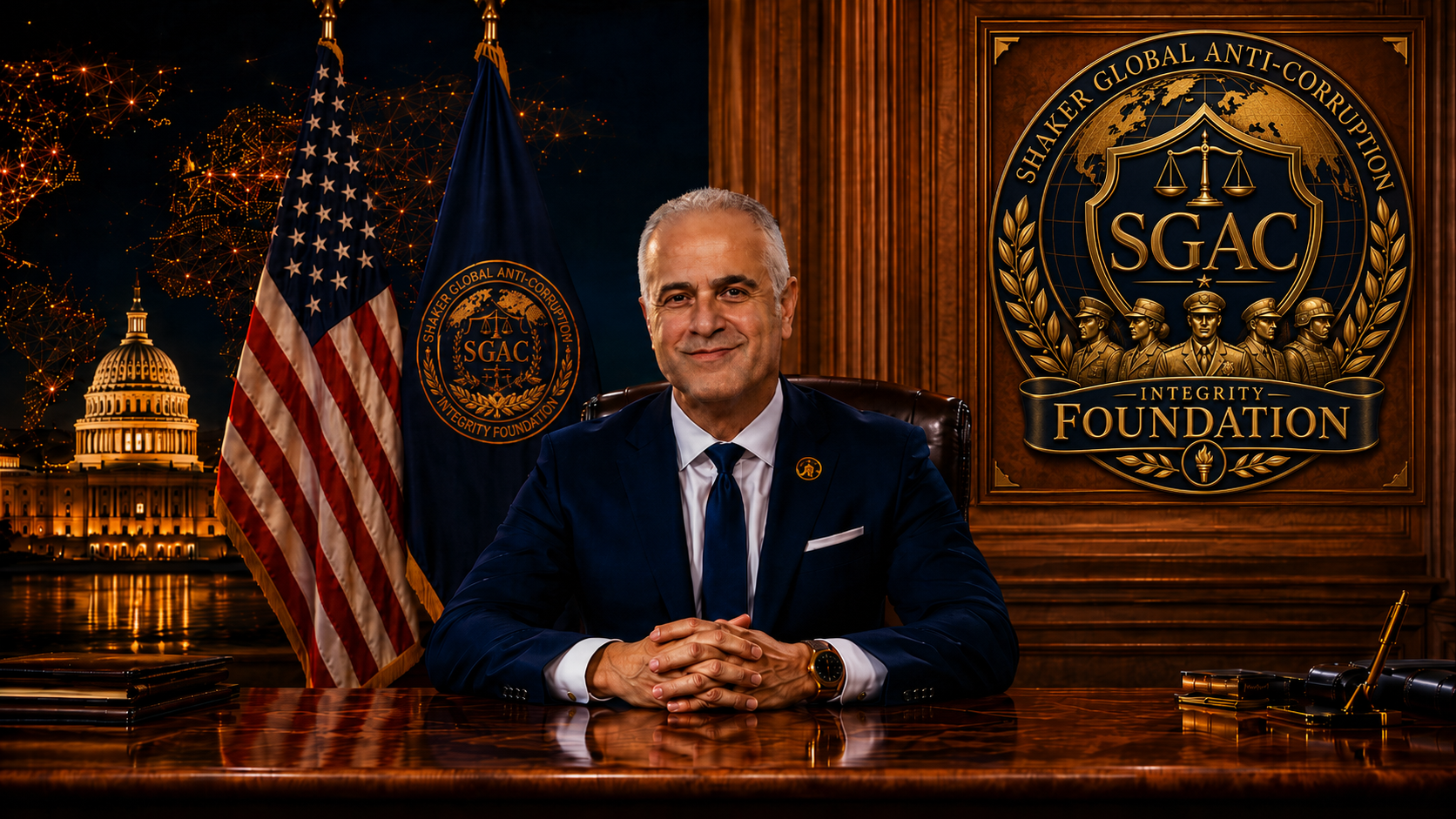
Morad Shaker Biography
Founder & Ecosystem Architect
A deeper profile of the founder identity, humanitarian vision, ecosystem philosophy, and institutional framework connected with SGACIF, SGPRE, and the related initiatives.
Full Biography
Morad Shaker is presented through SGACIF as a Founder & Ecosystem Architect whose work is centered on building structured humanitarian, integrity, education, accountability, and poverty-reduction initiatives. His founder identity is connected with the belief that humanitarian progress requires more than isolated support. It requires an organized ecosystem where integrity, education, service, emergency response, compassion, and opportunity can support one another through a clear institutional framework.
The foundation of this vision is connected to the idea that poverty and human suffering are not caused by a single issue alone. They are often strengthened by corruption, weak institutions, lack of access to education, limited opportunity, emergency vulnerability, and the absence of responsible support systems. Through SGACIF and the broader ecosystem structure, Morad Shaker’s work places integrity and accountability beside humanitarian development rather than treating them as separate missions.
SGACIF, the Shaker Global Anti-Corruption & Integrity Foundation, represents the institutional integrity layer of this work. It focuses on accountability, transparency, anti-corruption awareness, responsible documentation, and the protection of public trust. Within the founder vision, integrity is not only a legal or administrative concept. It is viewed as a humanitarian requirement, because vulnerable people are often harmed most when institutions fail, opportunities disappear, or public systems lose fairness.
The Shaker Global Poverty Reduction Ecosystem (SGPRE) is the broader framework connecting the wider set of initiatives. SGPRE is designed as a master humanitarian framework where different organizations and initiatives can serve distinct roles while remaining connected to one shared purpose. Education initiatives support long-term opportunity. Humanitarian initiatives respond to hardship. Integrity systems protect trust and accountability. Emergency initiatives prepare for urgent needs. Service and recognition initiatives honor sacrifice and leadership. Compassion-focused initiatives extend the ecosystem’s values beyond human communities to the care of living creatures.
A major part of Morad Shaker’s founder philosophy is that sustainable development depends on structure. Short-term support can provide relief, but long-term transformation requires systems that can identify needs, connect people to opportunity, recognize service, document harm, and strengthen trust. This is why the ecosystem approach is central. Each initiative has its own purpose, but the initiatives are designed to be understood as part of one broader humanitarian and institutional vision.
Operation Bangladesh represents one of the humanitarian engines within this ecosystem. It is connected to structured support, public awareness, and community-centered assistance. SISP, the Shaker International Scholarship Programs, represents the education and opportunity layer, helping connect students and families to encouragement, scholarship support, mentorship, and long-term development. SGHF, SGAPF, SFASH, SHIETF, and Phoenix Passage expand the framework into recognition, animal welfare, service heroes, emergency response, and future leadership pathways.
The biography of Morad Shaker is therefore not limited to a single organization. It is connected to a layered institutional identity: founder, ecosystem architect, humanitarian planner, and builder of platforms designed to connect integrity with development. The long-term vision is to support a world where vulnerable people are not left without pathways, where service is recognized, where institutions are expected to act responsibly, and where structured humanitarian ecosystems can create more durable impact.
Through SGACIF and SGPRE, Morad Shaker’s identity is presented as part of a global framework built around dignity, accountability, and structured opportunity. This biography page provides the deeper context behind the public founder overview and explains how the initiatives connect under one broader humanitarian vision.
Timeline / Milestones
Education Access
Shaker International Scholarship Programs developed as an education-focused initiative supporting students, families, mentorship, and opportunity.
Humanitarian Expansion
Operation Bangladesh expanded the founder vision into structured humanitarian support, field awareness, and community-centered development.
Integrity Foundation
SGACIF established the institutional integrity layer focused on accountability, anti-corruption awareness, transparency, and responsible conduct.
Ecosystem Framework
SGPRE became the broader master framework connecting integrity, education, service, compassion, emergency support, and poverty-reduction efforts.
Future Pathways
Phoenix Passage and related initiatives represent future-facing pathways for transformation, leadership, and global humanitarian development.
Vision Statement
The vision connected with Morad Shaker is to build a coordinated humanitarian ecosystem where integrity, accountability, education, service, compassion, emergency support, and poverty reduction work together as connected parts of a long-term global framework.
This vision positions SGACIF as the institutional integrity platform and SGPRE as the master ecosystem structure connecting initiatives that serve people, communities, and future generations.
Founder Philosophy
Morad Shaker’s founder philosophy emphasizes structured action over scattered activity. Humanitarian work becomes stronger when it is connected to responsible systems, clear roles, ethical conduct, and long-term development pathways.
The philosophy also connects integrity with poverty reduction. When accountability is weak, vulnerable communities are harmed first. When systems become more transparent and responsible, opportunity and dignity become easier to protect.
Ecosystem Explanation
The ecosystem contains several connected initiatives, each with a distinct role inside the broader SGACIF and SGPRE structure.
SGACIF
The integrity and accountability foundation layer of the ecosystem.
SGPRE
The master humanitarian and poverty-reduction ecosystem framework.
Operation Bangladesh (OB)
A humanitarian initiative connected to community support and structured assistance.
SISP
An education and scholarship initiative focused on opportunity and student support.
SGHF
A recognition and support initiative for service, courage, and social contribution.
SGAPF
An animal protection initiative connected to compassion, rescue awareness, and welfare.
SFASH
A service-heroes initiative honoring duty, sacrifice, and public service.
SHIETF
An emergency task-force initiative focused on preparedness and response support.
Phoenix Passage Initiative
A strategic initiative connected to transformation, opportunity, and future leadership.
Frequently Asked Questions
Who is Morad Shaker?
Morad Shaker is presented on SGACIF as the Founder & Ecosystem Architect connected with SGACIF, SGPRE, Operation Bangladesh, SISP, and related humanitarian initiatives.
What is SGPRE?
SGPRE stands for Shaker Global Poverty Reduction Ecosystem. It is the broader framework connecting humanitarian, education, integrity, emergency, service, and development initiatives under one ecosystem structure.
How is SGACIF connected to the ecosystem?
SGACIF operates as the integrity and accountability foundation layer within the wider humanitarian ecosystem, supporting anti-corruption awareness, transparency, and responsible institutional conduct.
Why is there a separate biography page?
The Morad Shaker overview page provides a clean authority profile, while this biography page gives deeper background, milestones, philosophy, ecosystem explanation, and supporting details.